Contract Airline Services


"We are the protagonists of our stories called life, and there is no limit to how high we can fly."


PHD. MBA. MHS. Type rated on A350, A330, B777, B747-400, B747-200, B757, B767, B737, B727. International Airline Pilot / Author / Speaker. Dedicated to giving the gift of wings to anyone following their dreams. Supporting Aviation Safety through training, writing, and inspiration. Fighting for Aviation Safety and Airline Employee Advocacy. Safety Culture and SMS change agent.

Thursday, April 18, 2013

REAL DISCIPLINE

T.H.ursday with Tom Hill


Most non-aviators think of discipline when it comes to aviation as something that's rarely needed but saves the day in very dramatic fashion. The movie version of this type of discipline is like those guys in the Star Wars scene when they're trying to bomb the exhaust vent. Tie fighters are everywhere. Flak is exploding around the heroes. A wingman is shot out of the sky. The stars are nervous and want to flinch out, yet this old guy is telling them, "Stay on target." Most people think of discipline in aviation as being that old guy who is unflappable in the midst of incredible danger. That's probably all true and all. But, when you're doing something completely benign, like flying for hours from point A to point B, an example of discipline more applicable to everyday use is: keep those long and boring trips long and boring.

I come from a community that's all about high dynamics and controlling massive chaos to achieve controlled results. Fighting air-to-air combat is physically and mentally demanding. It requires intense commitment and perseverance. Certain types of personalities make great fighter pilots. Usually terms like aggressive, attentive, detailed oriented, and highly intelligent are thrown around when talking about people in this community. One term not usually used is patient, or even accepting. Problems can occur when you expect the aviator accustomed to the high intensity tempo of shooting the other guy out of the sky to do something much more mundane, like flying his aircraft from Florida to Hawaii. You encounter a different set of challenges. And, none of them are as exciting as "stay on target."

Discipline is needed to keep aviators doing the "right" things when boredom is the most dangerous adversary, just as it's needed when bombs are bursting around you. It takes mental commitment and perseverance. It can be intense. And, it can take incredible mental strength to stay on task.

What's interesting is I hardly ever hear people talk about this type of low-key discipline. Most discussions on discipline cluster around more dynamic applications. We praise those who have traveled through crazy gauntlets, as if they won an Olympic medal. Yet, we don't normally praise those for doing what they're supposed to do each and every day. If you really acknowledge how difficult it is to do these mundane things incredibly well, you realize such low-key discipline is deserving of equal praise.


It's hard to tell stories that give praise to people who do the right thing day-in and day-out. But, it might be worthwhile for me to tell such a story about doing the right thing in the middle of a long flight.

I once was lucky enough to deploy with a group of F-15's from Kadena AB in Japan to the Continental United States. It's a long way from home with a lot of ocean to fly over. Unlike when you're flying a passenger airliner, you don't fly as high or as fast because you have to air-refuel along the way. The result: instead of a six or seven hour airline flight from Florida to Hawaii, it's well over 10 hours in the spaces of a fighter cockpit.

Let me give you a little background about what you wear when flying the F-15. You wear everything you might need in case you unexpectedly get dunked into the water. As a result, you carry a lot of stuff even though you may never use any of it.

In a survival vest you have mirrors, flares, markers, gyro-jets, two-way radios, radio beacons, etc. You might even have food in your flight suit just in case. Add all that to your normal flight gear, which includes a helmet, mask, parachute harness and g-suit, and you start looking like the Pillsbury Dough Boy.

Now, imagine wearing all that in the cramped confines of a single-seat fighter. It's probably not much roomier than sitting in coach on a regular airline, except there's no need to worry about reclining into the passenger behind you - you can't recline. You're sitting ramrod straight, completely strapped in, as if you might eject on a moment's notice. There's no tray to put your food on because your food is prepped into bite-sized pieces. No need for a tray. You're able to adjust the rudder pedals and perhaps raise or lower the seat, but, that's about it for crew comfort. It gets better: the seat your posterior is on was nicely padded when the jet was brand new. But after 5,000 high g flight hours, the pad is about as soft as a piece of plywood. That's okay because after about five hours of sitting on this you've lost feeling in your lower extremities. It's a blessing, really.


Imagine highly competitive aviators, strapped into a very uncomfortable rack, doing a very mundane thing. What would they do to entertain themselves and keep some semblance of awareness? It's not like you can take a catnap when flying by yourself. This is where that low-key discipline I mentioned before comes into play. "I will not do something stupid, I will not do something stupid." It's a pretty common mantra when you're bored.

For long trips, I know some guys have played games. You're lucky if someone brings a Trivial Pursuit deck. It's a special treat until you've been through the deck three times. There's Battleship. That's a crowd favorite, even though hearing, "You sank my submarine," on the radio is a little unusual when flying a fighter jet. Nowadays, you might have books on tape, or even your ipod. Technology is a wonderful thing. Back 20 years ago we had none of that. We only had the things we thought of to entertain ourselves. This can get interesting when a young Lieutenant cooks something up.

I was No. 5 in a six-ship of F-15's flying from Panama City, Florida, to Oahu, Hawaii. I was at the rear, with my Lieutenant wingman with the rest of the gaggle of F-15's, and our tanker spread out in front. We were all about a half mile from each other, which makes long distance flying much easier. You don't have to stay too attentive to your lead or the other flight members.


My wingman is out to the left of me. We were about five hours in, feet wet, about half way to Hawaii, when I hear on our inter-flight frequency, "Hey, Sulu. Look at me!" This is not what you want to hear. Thinking boredom has gotten the best of him, I shoot a glance over expecting him to be upside down or worse. I see his jet, perfect, not doing anything. It's just there.

"Hey, did you see it? Did you see it?"

I'm thinking, huh? I see nothing. I respond, "See what?"

"Just a sec." Large pregnant pause. "Did you see that?"

I see nothing. His plane is perfect. It's out there in formation as he should be. "Nope, I don't see anything. What am I supposed to see?"

"I've got my survival mirror out. I'm trying to flash you!"

In our survival vests, we carried a highly polished mirror to be used as a signal device after you ejected and were standing on the ground. When used correctly, these mirrors could be observed more than a hundred miles away. I'm not sure I ever heard of anyone using their mirror in-flight like my wingman tried. In this case, he was failing miserably at Signal Mirror 101, which was probably just fine since he was occupying his brain with such benign nonsense. I developed this image in my head of him contorting is body in his cockpit trying to aim the mirror and reflect the sun on my jet, all the while keeping things straight and level. That mental image kept me occupied for quite some time. 

Of course, the rest of the 10 hour flight wasn't nearly as dramatic as those 30 seconds.

As painful as those flights were, I would much rather have them be boring than exciting. Boring meant things were going as planned, and superior skill and intellect weren't required to save the day. I consider myself lucky in that most of my long boring flights were exactly that, long and boring, and that low-key discipline was well exercised during those flights.

Now, there was one ocean crossing long flight that wasn't so boring. It's a good story. I'll tell you later.

Cheers
Tom
www.tom-hill.biz

The first two images were taken by Tom near his house in New Mexico. The F-15 photos were nabbed off the internet. But I don't know who to give credit to! But they deserve it.

Wednesday, April 17, 2013

Lighting Up the Night

An Excerpt from

“50 Tales of Flight”


The four engines hummed hypnotically through night sky over the Pacific. While Honolulu sat only a matter of miles away, the passengers on board the Boeing 747 were blissfully unaware, curled up beneath their blankets in the darkened cabin. The cabin crew chatted in hushed tones behind the galley's heavy curtains, planning their shopping strategy when they arrived in San Francisco in a few hours time.

On the flight deck the tone was also hushed so as not to disturb the resting crew at the compartment's rear. The aircraft continued to track faultlessly along the magenta line on the instrument flight display as the 'Top of Descent' indicator and San Francisco edged ever closer down the screen. I called up the latest weather reports through the aircraft's onboard system and shared them with my fellow pilot. It was set to be a beautiful day, but we ran through all of our available options and fuel status to ensure that all our bases were covered.

The first rays of the sun had not yet crept above the horizon but a portion of the upper atmosphere was just revealing the first traces of the new day. A light, faint haze met the curved shadow of the earth's outline in an arc that spanned the horizon from left to right. The day was encroaching on the stratosphere, but not yet on the earth below.

The first indication that something special was taking place was not visual in nature. It was the chatter of American crews transiting the busy route between the mainland and Hawaii. “Can you see that?”, “What is it?” and “Is someone starting World War Three?” The exchanges peaked my interest, but gave no indication of the location or nature of the commotion. Then there was a hint. “There. On the horizon. Down low. It's brilliant!”

I leaned forward in my seat and peered into the darkness below. Nothing. Resting my arms on the top of the instrument panel, I cupped my eyes with my hands to keep the glow of the instrument panel to a minimum. Then I saw it. A tiny, bright intense light, like the tip of a white hot arc welder. Almost stationary, it was growing larger, ever so slightly. Seemingly in a matter of seconds it grew from a needle point to a distinct flame, growing both in mass and momentum at a rate that was difficult to comprehend.

“What is it?” the other pilot echoed my thoughts, equally astounded. Still it grew each and every second to a brighter and more impressive light, seemingly darting skyward. There was no perspective available to gauge distance or offer an idea of its size; just an ever-increasing intensity. Then someone identified the UFO that was captivating every crew aloft that night. “It's a launch out of Vandenberg.”

A rocket launch from the US Air Force base on the west coast. Now everything made sense. It was hundreds of miles away, but so powerful that it was clearly seen by every aircraft in the flight levels and as it climbed it seemed to grow in speed as its trajectory could now be viewed in profile. Up through the darkness and onwards towards the illuminated upper atmosphere, the rocket would reach the daylight before the night's end for any of the citizens below. In an absolutely spectacular display of sheer energy, the projectile closed in on the arc between night and day, dark and light. One almost expected it to tear through some barrier between dawn like ripping fabric. And then it virtually did.

Just as its furious flightpath penetrated the arc.

Wooomf!

A flash of light that seemingly lit up the night for an instant before a mammoth expanding ring of vapour exploded across the sky. Like those TV documentaries that show the final burst of light across the galaxy from a dying star, such was the scope of this amazing sight. In reality it was the rocket jettisoning a stage of its cylindrical being to leave the 'sharp end' to continue its journey into 'earth orbit'. Bound for space and relieved of much of its load, the remaining portion seemed to accelerate ever-faster and ever-higher. I craned my neck to look skyward and follow the lone beacon as it roared away and finally faded from my mere mortal sight.

Wow!

It had departed as quickly as it had emerged. All that now remained was the ring across the horizon which was now merging with the moisture to develop into a cloud system of its own, like an atmospheric calling card. Its passage had been silent, but its impact was immense.

Over the years, I have been very fortunate to see many wonderful sights from this treasured vantage point in the sky, but that pre-dawn morning off the west coast of the United States will always rank very highly. In a matter of minutes, a simple light had transformed the sky and left everyone who had witnessed it breathless.

Meanwhile, the four engines of the 747 still continued to hum hypnotically and the cabin crew chatted while the passengers slept, blissfully unaware. But for this boy from Sydney, Australia, I would never look at the night sky quite the same again.

~ To learn more about Owen... click HERE.

Tuesday, April 16, 2013

Flight Attendants in Europe


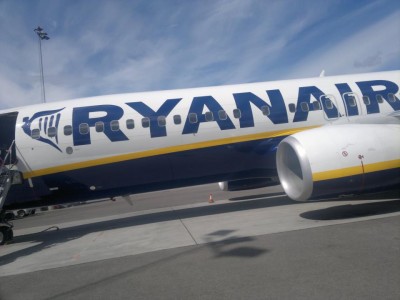
Last week in Bombay I met a Lufthansa pilot who is actively involved in the European pilots union and is concerned with safety. He subsequently sent me an article that revealed some interesting facts on Ryanair cabin crew. Hopefully he will send me more on the flight crews too.


Below are the bullet points from an article that he had sent  concerning two cabin crew members who had been fired. For all US based Flight Attendants, I think you'll agree the grass is not always greener.

  • While the employer can terminate the three-year contracts at any point, and with anywhere from zero to 14 days notice, the employee was subject to a charge of EUR 200 as an “administrative fee” if she resigned prior to 15 months.
 
  •  The employee not only had to pay for her own training but also for her uniforms (EUR 30 was deducted from her paychecks each month for a year) and their ID cards. Any items consumed on board the aircraft was also deducted from her pay. If the amount of deductions exceeded her paycheck, the difference was due within 14 days and subject to interest costs and fees if overdue. 
 
  • Hourly pay in one of the flight attendant’s contracts was set at NOK 122 (USD 21) per hour of flight time, with no extra pay for weekend or holiday work. Annual pay was estimated at NOK 115,000 (USD 20,000).
 
  • Participation in any strikes or demonstrations related to a labour conflict were grounds for immediate dismissal. 
 
  • No sick leave was paid and any absence from scheduled work, regardless of reason, led to deduction from her paychecks. Twenty days of annual holiday had to be planned well in advance and could be cancelled at any time if Ryanair needed the employee to work. She could also be ordered to take a minimum of four weeks of unpaid leave every year to meet the company’s need to reduce staffing during low travel seasons. 
 
  • The employee was also subject to a certain number of “stand-by” shifts and had to be able to report to work within an hour if called in. No compensation was paid for the stand-by waiting periods. 
 
  • The Rygge airport at Moss, south of Oslo, was listed as the employee’s base, but she was warned that she could be moved at any time, and would need to pay the costs of her move. 
 
  • All terms of the contracts were to be kept confidential. The employee was warned that violation of the confidentiality tied to the contracts would be seen as grave dereliction of duty and grounds for dismissal with possible legal action as well.

What is happening in Europe in Aviation? This is might just be the tip of the Iceberg. 


Alex Wood, over at the The AVIATOR shares his thoughts on what's happening in Europe.


The Aviator

"2013 is expected to be another profitless year for the European carriers. After the deregulation in 2008, the airline companies have been facing massive losses close to $1.7 billion dollars. Despite the fragmented air traffic management, the lack of infrastructure, high fuel costs and commodities charges, and heavy operational regulations, competition for the most profitable route has shifted to Europe’s 3rd biggest export location, Russia..."

Are slave wages the answer? How does cutting costs impact safety? Please drop by The Aviator to read more the the European Crisis...

Enjoy the Journey!
XO Karlene 

Monday, April 15, 2013

Flying

Tell me and I'll forget. 
Show me and I may remember. 
Involve me and I'll understand.
Chinese Proverb


There is nothing like doing. And doing it in an airplane makes it all the better.  


I've been on the road flying with a great captain, and a group of wonderful First Officers. Tomorrow I'll be back in Amsterdam and get to see my friend An. Next month I'll be attending recurrent training, so having the ability to fly has been a gift.
 

There is no place like the sky. 


There is also no place like home, and I will be there in four more days. I can hardly wait~  


Enjoy the Journey!
XO Karlene 

Friday, April 12, 2013

Brad Tate

Friday's Fabulous Flyer

Brad Tate

Patience is a virtue and Brad is in every definition of the word, a captain. I had a great time reading his most recent post on his blog, Airline Pilot Chatter, and whether he is flying right seat or left, battling broken planes or challenging weather, or dealing with mergers he has made his dreams come true. Determination, and a passion for flight got him to where he is today. His attitude is what will keep him strong during the many challenges the industry will bring. Being a captain is not a seat position, it's all about the person.

Please welcome Brad Tate~

The most common question I get from readers of my blog is "How did you become an airline pilot?"  While there may or may not be a shortage of pilots on the horizon, there never seems to be a shortage of young men and women out there searching for the best answer to that question.  I've always enjoyed interacting with new and young aviators.  Everything is both fresh and new or still to come and they seem to desire nothing more than to soak up every ounce of information and experience they come across.  On selfish grounds, interaction with pilots so excited about the profession helps to keep my internal fire burning.

The "how to" question can be difficult to answer due primarily to a seemingly infinite number of possible paths.  Should I attend an aviation university?  What about the military?  Do I need an aviation degree in college?  Do I even need to go to college?  I could gain time as a flight instructor, banner towing, small freight, pipe-line patrol, corporate...the possibilities are endless...and my answer is usually to walk through every open door and take advantage of every opportunity.  I almost never said no when I was building flight time and I suppose that strategy paid off.

Of course, it's important to have a plan.  Walking the path to professional pilot requires a significant investment in time, effort and money and the process isn't something anyone should enter lightly.  The story about how I got to where I am today is one filled with twists and turns, some unexpected and others I saw coming.  It's been a long journey and it's far from over, but I hope shining some light on the footprints I left behind may prove helpful to some of those trying to find their way along the same path.


My mother's father was a private pilot.  He was a banker in western Oklahoma and got his kicks flying around in a V-tailed Bonanza during the 1960's. My father's father was a WWII era B-25 Crew Chief stationed at Greenville Army Air Field in Greenville, SC where he helped train the Doolittle Raiders.  My own father flew OV-1 Mohawks in Vietnam and spent 32 years as a pilot for Delta Air Lines.  But as surrounded by aviation as I was, a career in the skies was never pushed on me or even encouraged until I began to show interest of my own.


I was a student at J.J. Pearce High School in Richardson, Texas when that finally happened.  The school offered an Aviation Science class that basically turned out to be a Private Pilot ground school course.  A former Braniff pilot visited our class on a regular basis and offered to take each and every one of us up in his own airplane, a beautiful 1966 Cessna 172.  He had a love of aviation and a passion for teaching young people to fly...the flight was his personal gift to our class and cost us nothing.

 
1966 Cessna 172 - N4664L

We went up three at a time and each got about fifteen minutes at the controls.  Some loved it, some hated it, some got sick and a few showed some natural ability and a desire to take the next step.  After flying with everyone who wanted to go, one person out of the class was chosen and taught to fly for free.  Really it was more of a trade…one hour of his time for one hour of the student’s.  He chose me and I spent the summer mowing my instructor's lawn, washing his car and learning to fly.  It was a good trade.

 
First solo...July, 1987.

Unfortunately, I moved off to college before I got started on my next license.  Money wasn't growing on trees, and the added expense of a flight instructor meant I had some saving to do, so  I got a summer job at a local FBO working as an assistant to two mechanics.  They put me to work and trained me in many of the less glamorous jobs around the hangar.  I spent most of my time changing brakes and tires, cleaning spark plugs, tearing down air frames and sweeping the shop floor in the sweltering summer heat of north Texas.  The guys knew I was trying to build time so they often came up with reasons for me to go out and “test fly” an aircraft after they were finished with repairs.  These flights were usually unwarranted, and we all knew it.  Technically speaking, this was the first time I was paid to fly an airplane since I was on the clock earning minimum wage at the time.

Using the money I earned during the summers and with the generous assistance of my parents and grandparents, I earned my Instrument, Commercial and Multi-Engine Ratings before graduating from college.  I graduated in 1991 with a Liberal Arts degree in hand, 750 hours in my logbook and an ignorant belief that I would walk through the doors at the local airport and land a job flying airplanes.  I really didn't care what or where I would be flying or how much it paid.  I just wanted to fly.

Instrument Checkride – 1991

Back then, one of the easiest ways to gain flight time was transporting cancelled checks.  I know this might sound crazy to some of the younger people reading this, but there was a time when people actually paid for things with a little piece of paper called a check (sarcasm intended).  Since the person you wrote the check to wanted their money fast and the bank was often half way across the country, small freight companies were paid to pick up the checks and fly them to a central bank for processing.  It was a difficult job for the pilot who usually flew all night, single pilot in an old, run-down airplane with no autopilot or radar. 

The company I eventually worked for had a sign over the door to the flight line that read "Don't be late, penetrate," referring to a direct line of flight through whatever nasty weather you encountered.  There was a long line of pilots willing to take the flight and the job if you refused, so the pressure to go was immense.  If they didn't quit or die trying, "freight dog" pilots emerged from this line of work with fine tuned instrument flying skills and valuable FAR Part 135 experience for their resume.

What I didn't know was that a pilot could not get such a job without at least 1,200 hours total time and 200 hours multi-engine…and I didn't have it.  Plan B meant getting my CFI, CFII and MEI certificates and teaching others to fly.  I got my ratings, landed a job at Monarch Air at the Addison Airport in one of the suburbs of Dallas, Texas and gave 780 hours of flight instruction in nine months.  That’s a lot of flying in a short amount of time, but I was hungry and I wanted to move on to the next stage of my career.

In my ninth month of instruction, my buddy Lee and I decided to start our own Part 135 operation.  We still didn't have the flight time needed to get hired, but we figured we could hire ourselves.  It came to our attention that the school we worked for had, at one time, operated Part 135.  So with permission from our boss, we got all the old books and manuals and went to the FAA for help.  We were assigned a Principal Operations Inspector and with his assistance, we managed to get our little business flying in relatively short order.  The week we opened our doors for business, the FAA grounded all the aircraft belonging to one of our local competitors, which presented a huge opportunity for our little freight company.  We were in business!

The only problem was that we were flying two airplanes, a Cessna T210 and an F33 Bonanza.  Both were single engine aircraft and we needed to gain multi-engine experience if we had any hope of moving up to a job with a corporate flight department or a regional airline.  So three months later, after our competitor had finally gotten all their planes back in the air, they hired us both to fly twins.  We happily accepted the jobs and handed our company to the next set of flight instructors looking to build Part 135 experience.

Then, as I was walking out the door for my first day on the job, I got a call from Atlantic Southeast Airlines in Atlanta, Georgia.  I had interviewed with the company two months earlier, but hadn't heard anything since and assumed I hadn't landed the job.  Turning in my two week notice on the first day was not fun or well received, but I couldn't turn down the job with ASA.

Three weeks later, I was in new hire class at ASA where I spent six years as a regional airline pilot…two years in the right seat of an EMB-120, two years in the right seat of an ATR-72 and two years back on the EMB-120, this time in the left seat.  By the time I had finished my first month at ASA, I was already applying for a job with the majors.  I only applied to the airlines I really wanted to work for, and I decided I would take the first job that was offered to me and never look back.  I submitted applications with American, Continental, Delta, Northwest, United and Southwest but only interviewed with American and Southwest.

Then, in the summer of 1999, while sitting in a hotel room in Long Beach, California preparing for what would be my last EMB-120 check-ride, American Airlines called to offer me a job.  I was ecstatic with the news and wanted to celebrate, but I still needed to pass that last check-ride.  As you might imagine, I found it incredibly difficult to concentrate.

Taken by my First Officer on my last day at ASA

Later that same day with the check-ride successfully complete, the phone rang again. It was Southwest Airlines. My two top picks offered me a job on the same day and presented me with an unexpectedly difficult decision. At the time, American paid more, had a better retirement plan, flew bigger, more exciting airplanes and flew them around the world. American Airlines Captains were receiving yearly bonus checks large enough to purchase new cars and Southwest just seemed like a better paying regional airline job. At least that’s how I rationalize my decision today. I always said I would take the first job I was offered and never look back, so I stuck to my plan and accepted the job at American.

I’m in my 14th year at American now and I still have trouble with the whole not looking back thing.  It hasn't been the career I thought I was signing up for, but I love what I do and wouldn't trade a minute of my experience for anything else.  It is all too easy to lose sight of all the great things in life, clouded by what could have been better. I am thankful for a great job and I am thankful that someone is still willing to pay me very good money to fly airplanes for a living. I love the airplane I fly and no one could claim to have a better office view. The feeling of a well flown approach or a smooth landing in difficult conditions is one that cannot be duplicated in another other line of work. I enjoy the people with whom I work. I visit cities all over the country and will someday fly all over the world. 

Is the job of an airline pilot as good as it used to be?  Will it ever be as good as it once was?  Maybe not, but I think my friend, author and fellow blogger Karlene Petitt put it best when she said  "I guess it depends if you are flying for the end goal, or the journey."

I'm here for the journey."

Thank you so much Brad. And thank you for your patience and my temporary (I hope) senility. For all of you who have enjoyed Brad's story... please follow him on Airline Pilot Chatter for much more. 

Enjoy the Journey...Brad is!
XO Karlene


Thursday, April 11, 2013

SUCCESS IS A MINDSET

T.H.ursdays with Tom Hill


"I was watching a TED talk with a subject about the mental qualities of very successful athletes. In this case, the speaker brought up example after example of sport legends at work in which a simple personal perspective seemed to lead them to accomplish extraordinary things. This speaker introduced a theory: it was about “belief." 

After viewing this video, I considered my own career. When might belief have affected what I had accomplished? As they say, hindsight is 20/20. Looking backwards is always correct. What I found was that I rarely felt like I wasn’t going to succeed. Sure, anxiety was present before taking that test or being evaluated. But, I never thought, “I can’t do this.” I always felt success was a matter of just getting it done.

Not everyone is like that. Some people, during checkrides, freeze up and snatch defeat out of the jaws of victory. I had one student at Test Pilot School who I personally hooked--i.e., failed -- on three of the curriculum’s four checkrides. He was a great kid but he could not take a checkride to save his life.

After the debrief for the third fail, he was sitting across the table from me with eyes lowered, totally dejected, and said, “Sulu, maybe I’m not cut out for this stuff.” That made me almost laugh because I saw in him tremendous potential to succeed as a test pilot. He simply did not do well in checkrides. I told him “You’ll do fine. You need to get out of Test Pilot School. Then, you’ll be great.” After graduation and years of active testing, my student turned out to be a great and capable test pilot, easily overcoming the bumps he encountered at TPS.


In so many ways we are our own worst enemies when doing challenging things. A lack of confidence or natural expectation to succeed may be the difference between success and failure. Being distracted by a potential for failure changes a mindset that could lead to success. My point here is it sometimes takes intense mental discipline to keep those doubts aside, to keep them from overwhelming everything.

Admittedly, it takes a certain amount of personal arrogance to believe one can achieve amazing accomplishments. Arrogance with nothing else is a problem. But, being mindful that you are able to succeed, combined with a humble awareness that things could go otherwise, is something entirely different.

Certainly, tasting the sweetness of success early in life makes future efforts more positive. As I’ve said before, success tends to lead to more success. That’s clear enough. What many people miss is that those folks we admire most likely never had a doubt in their minds about their futures or their abilities to succeed. They never considered or had that creeping feeling it wasn’t going to work out. The key factor in all this was simply never letting that negative feeling into our mindset."


Cheers
Tom

Note: Photos were taken with Toms' iPhone in a little mountain town, Ruidoso, about 60 miles from his house.
www.tom-hill.biz

Thank you for another great article Tom! 

Confidence can make or break your ability to perform. Have you ever experienced a lesson of confidence

Enjoy the Journey! 
XO Karlene

Wednesday, April 10, 2013

FAA and Automation

When I took my 757 type rating checkride I was told to keep the automation on. My entire checkride, less the airwork of steep turns and stalls, was done "managing" the autoflight system. 


When I was done with the checkride I told the FAA examiner that this was the easiest checkride I had ever taken. I also told him that I thought mandating automation was going to come back and haunt us. That we should not only continue to train pilots to fly their planes, but we should test those flying skills in the simulator without the automation, and also encourage our pilots to continue to hand fly on the line.

He chuckled and said something like... "The reliability on these planes is too great, and the probability of failure is highly unlikely. This is the future. There won't be a problem."

I said, "Never say never."


And there you have it. Almost 22 years later they have shifted their attitude. Guess what the FAA is recommending?  


Do you have a if only they would have listened story? It's kind of fun to go back through our lives and say, "I knew it!" But then again... sometimes it isn't. 

Enjoy the journey!
XO Karlene