Contract Airline Services


"We are the protagonists of our stories called life, and there is no limit to how high we can fly."


PHD. MBA. MHS. Type rated on A350, A330, B777, B747-400, B747-200, B757, B767, B737, B727. International Airline Pilot / Author / Speaker. Dedicated to giving the gift of wings to anyone following their dreams. Supporting Aviation Safety through training, writing, and inspiration. Fighting for Aviation Safety and Airline Employee Advocacy. Safety Culture and SMS change agent.

Tuesday, June 12, 2018

Pilot Shortage of Another Kind


Memoirs from a seafaring captain


"During the time when events in the “Absentee Training Pilot” narrative occurred (circa 1977), our pilot organization was short of pilots. The opening of the Trans Alaska Pipeline Terminal at Valdez would further accelerate the need for new pilots. As a consequence new members (including me) were being put through what might be described as an expedited and intense training program. Training at that time followed more of a “guild system” than formal training. 

Although we all had considerable prior experience in the maritime industry, maritime pilots in Alaska bore some similarities to Alaska Bush Pilots in that our job experiences and training regimens were often unique from our counterparts in the “Outside”. The attachment relates to that uniqueness. 

For the record, training over subsequent years became more regulated and comprehensive. It is difficult to imagine any circumstance where such an experience as described in the attachment could be repeated today. Although, it should be noted that many highly regarded shiphandlers were the products of that often stressful system."  Captain Jim Wright


Jim Wright


The Absentee Training Pilot

"The following account escaped being recorded in my job log although it remains fresh in my memory. The vessel in question was a “handy bulker” of probably 15K to 20K DWT.

The assigned pilot for this job was quite a bit my senior in both age and experience and was possessed of a rather irascible temperament. He had supervised my handling and docking of a similar vessel on her inbound leg and his response to my question regarding the job was unexpected. Rather than discussing the job as was expected, he simply said, “You did a fine job of bringing in that other ship, the weather tonight is expected to be good, there’s no reason you can’t handle this outbound job by yourself. Click – end of conversation. Having had limited experience with this type of job, my first thought was, “you’ve got to be kidding”, until it dawned on me that he wasn’t. 

Departing the Homer Airport that evening in the well-worn Alaska Aeronautical Industries twin Otter the weather remained calm. This changed markedly during our 30-minute flight to Kenai. Well before final approach the experienced passengers had double reefed their seat belts as the Otter seemed to be enjoying an attempt to conduct unauthorized aerobatic maneuvers. Landing in the gusty winds at Kenai was one of those “anything-you-can-walk-away-from” experiences.


The taxi ride to the terminal confirmed my increasing apprehension that this job was going to fall well outside the parameters of normal. By the time we reached the terminal the wind had increased to a point where the taxi was shaking in the parking lot. 

Conditions worsened upon reaching the berth. The vessel was starboard side to with the increasing wind and swell causing her to surge heavily. The gangway had been removed to avoid damage and the Greek Captain, who had come ashore to confer with the loading supervisor, was glancing in my direction with an anxious look in his eyes while fingering his “worry beads”. 

The loading supervisor briefed me on the situation stating that although loading had not yet been completed he didn’t believe the dock could take much more pounding from the vessel without sustaining damage. Then, apparently uninterested in discovering my experience level, he asked the dreaded question, “Mr. Pilot, can you get her off the berth under these conditions? 

Should my response be direct, or should it be what the supervisor wanted to hear? Suddenly it occurred to me that there is a considerable similarity between a harbor pilot’s duty to inspire confidence and a stage actor’s duty to influence an unfamiliar audience. How would Laurence Olivier or Richard Burton answer the supervisor’s question? Avoiding a direct answer, my response was, “If you can hook a couple of slings on the crane runner and swing us aboard, we’ll see what we can do”. With the vessel now taking seas on deck and the Master and I both swinging in the wind 30 feet above the deck trying to gauge our landing point, we must have looked like a “poor man’s Flying Wallendas Act”. 

Time was now of the essence. The opposing ebb current was nearly exhausted. Once the flood began, it would bring a heavier swell and force us to make a “fair tide” undocking without tug assist with the wind and swell pressing us on the fenders.

The “absentee training pilot” had demonstrated this maneuver to me once before during a previous observer trip although the weather had been much better. In simple terms we had to take in all the lines then use a fairly strong “astern bell” to build up enough sternway into the wind and swell to get the vessel in a position where we could use the engine and rudder to roll her around the knuckle while getting enough angle between the bow and the forward fenders to give her a “Hail Mary bell” and drive her out and clear of the berth.

On my first attempt, all seemed to be going well until the “Hail Mary” part where the courage of my convictions failed to produce a strong enough “ahead bell” and she laid back on the fenders. It should be noted that this miscalculation did nothing to strengthen my confidence. 

Our situation could now be compared to an airline pilot who just aborted a take-off and had to retry without fully appreciating the reason for the first abort. Not a comfortable situation to be in.

Our options were two-fold. Try again with a stronger bell and risk taking out the entire berth or remain alongside and let the vessel’s surge against the fenders take out the entire berth. These unhappy options encouraged me to make another try. 

This time, a “full ahead” bell was ordered followed by judicious rudder orders to keep the vessel rotating off the fenders and the stern just clear of the knuckle. This more aggressive plan produced better results. As we built up speed, we avoided contacting the knuckle with the stern and the bow began to gradually move away from the fenders. Using an aviation analogy, you could say that we were at “V-2+ with a positive rate of climb” except that the LNG berth to the north of us was now closing rapidly. Fortunately, there was sufficient room between the north end of our berth and the south end of the LNG berth to order hard-a-port and make our getaway to more open water. Once clear of the berths, we anchored close enough to remain in radio contact with the terminal. Finally, laying down on the bunk in the pilot room, my sense of distress (bad stress) began changing to eustress (good stress).

The following morning conditions had improved when the terminal called and asked if it was possible for me to bring the vessel back alongside (without a tug) to load some remaining bags of urea. Somehow our conversation afforded me the opportunity to convince them that bringing the bags of urea out on a barge (which had showed up during the night) would be the more efficient solution. Or perhaps they had become aware of my relative inexperience and did not want to risk having me bring a nearly fully loaded vessel back alongside. In any event, we both seemed satisfied with the chosen remedy.

The absentee training pilot reportedly enjoyed his evening at home. He later made some remark about hearing it might have been a bit windy at the terminal. Nothing further was heard."  Jim Wright


Enjoy the Journey...
It's an adventure!
XOX Karlene


Friday, June 8, 2018

Good Judgement

Up To My Waist in Sea Water 
Discharging Forepeak Ballast Tank

Written by Captain Jim Wright:

Winter trips across the Gulf of Alaska were often challenging. We had to keep the forepeak ballast tank pressed up until reaching Cook Inlet so the bow would not pound heavily in the unending head seas and swells. Then, approaching Cook Inlet, it was necessary to pump out the forepeak tank so the water would not freeze while going up the Inlet to Anchorage. 

On this voyage it seemed head seas would persist through the night and into Cook Inlet where the temperatures were well below freezing. Pumping the forepeak during daylight would require going on the foc’sle head to open the eductor valve while the ship continued to pitch heavily. The Captain was resisting a speed reduction and further discussion with him seemed unproductive. 


Rounding up the Bos’n and Day-man, the three of us headed forward where we took cover from the seas under the break of the foc’sle. Now the task was to make a 25-yard sprint across the foc’sle head to the anchor windlass, insert a square-headed valve wrench and make several round turns with the wrench to open the educator valve before a head sea of sufficient size arrived to bury the bow. Going on the theory that you shouldn’t ask someone to do something you’re not prepared to do yourself, the foredeck sprint fell to me. 

At this point the bow was just recovering from a heavy dive and an opportunity for the “sprint” seemed about as good as it was going to get. My estimate of the elapsed time necessary to reach the valve, insert the wrench, make the necessary valve-turns, and return to safety seemed to correspond to the period between the heavier swells. As it turned out, my estimate was optimistic and the procedure took a bit longer than expected. 

Suddenly, while turning the valve-wrench, a sense of zero gravity overtook me together with the roar of compressed air being driven through the hawse pipes as the bow dropped away into what was seeming like a bottomless abyss. My only chance now to avoid being swept overboard with the oncoming swell was to wrap my arms and legs around the windlass brake-wheel shaft and hope for the best. The compressed air had now converted to sea water exiting the hawse pipes like “Old Faithful” and raising the unhappy possibility of putting me completely underwater. Then, as the water was rising toward my waist and hope was fading, came those unmistakable vibrations of buoyancy converting “zero G” to a “multiple G” force and pinning me to the deck as the bow rose rapidly. As water began to recede from the foc’sle head, a return sprint to relative safety was now possible. 

Later, the mate on watch on the bridge during that episode told me the Captain was freaking out when he saw the bow was going under. He had not heard anything from us and thought we all might have gone overboard. 

It might be of interest that noted author, aviator and seafarer, Ernest Gann’s oldest son George was swept overboard from a Chevron Tanker near the entrance to Cook Inlet about the same time (and may have been the same storm). Ernest Gann’s novel and movie, “Twilight for the Gods” was dedicated to the Midshipmen of California Maritime Academy, the school from which his son had graduated in 1958. 

You could say that both George Gann’s and my misadventures could be attributed to a similar problem. Although, George’s tragic outcome clearly eclipsed my experience. 


George was Chief Mate in a new 70,000 DWT Class of Chevron Tanker of considerably greater length (798 feet) than other tankers of that era. After departing KPL Nikiski fully laden, they encountered storm force winds, seas and swells in Kennedy Entrance. Several oil drums managed to come adrift and were rolling around on the poop deck. There are several accounts of what happened next. The most consistent follows:

“The Chief Mate was in the officers dining room and, along with the Bos’n, ran out onto the open deck to secure the drums. Soon after the Master joined them. Somewhere during their efforts, the bow rose to a head sea of substantial height driving the stern completely underwater and carrying the Master and Chief Mate overboard and crushing the Bos’n who soon died. The Master and Chief Mate were never found. Had they been aware of the new vessels tendency to bury her stern in a heavy head sea they most likely would have approached the problem differently.

In both George’s and my situations, you could also say the better solution escaped us although for different reasons. The SW Alaska Pilot who brought Chevron Mississippi back into the anchorage told me the crew was not aware of the tendency of a vessel of that length to bury her stern when steaming into head seas as had happened. 

In my “Sea-Land bow dunking episode”, it later occurred to me that the foc’sle head valve fitting was connected to the eductor valve with a reach-rod which could have been accessed from inside the foc’sle and turned with a pipe wrench. This solution would have eliminated the need for my foc’sle head sprint. My situation was more an example of the adage, 

“good judgement comes from experience 
and experience comes from poor judgement”


Enjoy the Journey!
XO Karlene 

Thursday, June 7, 2018

Prologue to Decision Making

Connie co-pilot caper


Email from Captain Wright. 

"This e-mail and its attachment relates to the value of experience in decision making. Some of your readers may find this story to be of interest. You could say that your novels all deal with this theme. 

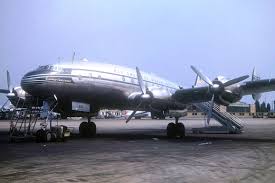
You may have read Ernest Gann’s autobiographical volume “Fate is the Hunter” describing various episodes from his career in aviation. Ernie was one of those people whose aviation exploits define an era that most likely will never be again. You might be familiar with his “Connie co-pilot caper”. 

Being short of funds and finding a Connie co-pilot job “up for grabs”, he presented himself for the position believing that the fact that he had never been in a Connie before could be overcome. As he and the Captain walked out to the aircraft, a plan formed in his mind. Expecting the Captain to be of an autocratic bent typical of Captains in that era, he figured the Captain would start the engines and conduct the taxi and take-off at which point Ernie would have observed enough to make a credible showing of competence. 


His plan went awry when the Captain turned to him and said, ”You start the engines and handle the taxi and take-off”. His cover being blown, there was nothing for Ernie to do but admit he had never been in a Connie before. The Captain’s unexpected response was, “Neither have I”, so they both deplaned and looked for other employment.

Perhaps lesser known was Ernie’s passion for seafaring which became the basis for several of his other novels and possibly responsible for his son George choosing seafaring as a profession. George graduated from California Maritime Academy the year prior to my arrival there and went to work for Chevron Shipping in their tankers running to Alaska. His final voyage bore some linkage to the excerpt from my memoirs included in the attachment describing an incident occurring 45 years ago while sailing as Chief Mate on the Sea-Land Alaska run."

The story tomorrow... 

Enjoy the Journey!
XO Karlene 

Tuesday, June 5, 2018

Flying Opportunities Await!

Riggin Flight Service


"Riggin Flight Service in Madison, South Dakota provides an in house DPE, mechanic, and off-site housing for their flight students. Riggin is looking for some new student pilots interested in becoming flight instructors. They provide loans to finance the flight training that don’t need to be repaid until the student’s training and flight instruction at Riggin is finished." 


For additional info contact 
Morris Riggin at
Riggin-Flight-Service@hotmail.com. 

Enjoy the Journey!
XO Karlene


Thoughts of a Sailor

Where the Sky meets the Sea.... 


I was recently discussing the issue of automation, the pilot shortage, regulatory bodies and the airline industry with Captain Jim Wright. My favorite seafaring captain who addresses similar issues with automation challenges in his world, that we have in the sky.

He is one of the most prolific writers, and his journeys, stories, and memory never cease to amaze me. He sent me an email to introduce a paper he wrote, and the email was so interesting that I will post that before his paper. But then he sent another email after our discussion. Thus, I'm posting these thoughts for you to contemplate... 


"Your comments on automation, the FAA and pilot shortage likely have some basis. Your effort to “keep the ship on an even keel” may end up taking you beyond “the call of duty”. By chance, a devotional guide that has accompanied me on many seafaring adventures included the following quote for today by Dietrich Bonhoeffer (the German pastor, theologian, spy and, anti-Nazi dissident), in his “Letters and Papers from Prison”:

“Duty is Never Enough - When men (and women) are confined to limits of duty, they never risk a daring deed on their own responsibility, which is the only way to score a bull’s eye against evil and defeat it. The man of duty will in the end be forced to give the devil his due”. 

To keep things in a proper perspective, Bonhoeffer lived at a time when the Axis forces deprived people of their humanity. Automation dependency simply dilutes peoples’ ability to think. Two quite different things."

Don't be confined...
Exceed your expectations!

Enjoy the Journey!
XO Karlene


Monday, June 4, 2018

Eastern Airlines and

History...


EAL Radio Show
Episode 368
June 4, 2018

Todays Show starts with Breaking news about Delta flying to India, MH 370 search being cancelled, and more... Then we'll step back in time to D-day! A show you won't want to miss. 


The broadcast is at 7:00 pm EDT. 
Call in at: 213-816-1611

See you at the Gate!


Enjoy the Journey!
XO Karlene 


Friday, June 1, 2018

Flying Job For NASA

It's not Rocket Science...

But it is a GREAT Opportunity.

Friday's Fabulous Flyer 
could be you!

The person in charge of NASA Aircraft Operations at the Johnson Space Center is looking for two pilots! Their primary job is supporting the astronaut office with aircraft and training, but they also fly other aircraft in support of other NASA missions.

They are looking to hire two contractor pilots.


Requirements: 

Must have a minimum of 1,500 hours of pilot-in-command or first pilot flight time in high-performance, ejection seat equipped, jet aircraft time, which includes at least 500 hours of jet aircraft having at least 3,000 pounds of thrust per engine is required. These aircraft must be aerobatic and capable of at least 6 G’s.

Link to the pilot position 
to learn more 


Link to the Aircraft Operations web page:

Enjoy the Journey!
XO Karlene